Every Pan Tells a Balance: The Quiet Economics of a Good Gravy
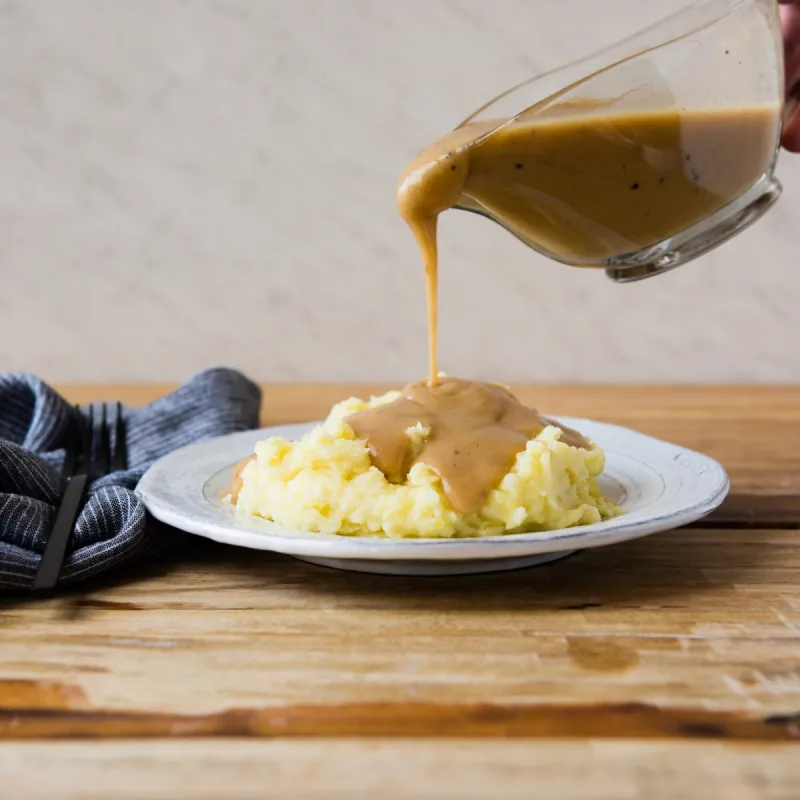
Photo: homemade gravy being poured over mashed potatoes rustic kitchen, via www.100daysofrealfood.com
There's a ledger book in the back of our kitchen. It's not official — it's a spiral notebook that someone grabbed from the dollar store years ago — but the cooks treat it like scripture. At the top of one page, in Marta's looping handwriting, it says: Sunday roast drippings — 2 quarts — DO NOT WASTE.
That notebook is what we call the gravy ledger, and it captures something true about how this kitchen thinks. A pan dripping isn't grease to be poured off. It's money in the bank, saved up over hours of roasting and searing, waiting to be spent on the people at your tables.
Drippings Are Deposits
Ask any of our cooks what makes gravy good and they'll all say some version of the same thing: you can't fake it from a packet. "The flavor has to already be in the pan," Marta told me, scraping a cast-iron skillet with the focus of an accountant balancing books. "The brown bits, the fond — that's the interest. Everything else is just arranging it."
When we roast chickens for the Tuesday special, the drippings go into containers, labeled and dated like cash in a vault. When we sear pork chops for the plate lunch, the fond gets deglazed with a splash of coffee or stock before it can burn. Nothing gets rinsed down the drain. In this kitchen, that would be like throwing nickels in the trash.
The Roux vs. Cornstarch Debate Never Ends
Every family has its fault lines, and ours runs straight through the thickener aisle. Dee, who's been on the sauté station longer than some of our servers have been alive, is a roux loyalist. "Equal parts butter and flour, cooked until it smells like a graham cracker," she says. "If your roux is pale, your gravy has no backbone."
Then there's young Marcus, who swears by the cornstarch slurry his grandmother used. "It's clearer. It lets the pan flavor shine. And it doesn't turn gluey if somebody's plate sits a minute." Dee's response to this is not printable.
The truth, which they'd both deny, is that they're right in different situations. Roux gives you that velvety, clinging, soul-warming gravy for mashed potatoes and biscuits. Cornstarch gives you a glossy, clean-tasting sauce for stir-fries and lighter pan sauces. Marta's compromise: roux for comfort plates, slurry for anything with citrus or ginger.
The Ratios We Actually Use
We're not precious about it, but there are numbers scribbled all over the ledger book:
- Pan gravy: 2 tablespoons fat, 2 tablespoons flour, 2 cups liquid per batch. Season after it thickens, never before.
- Sausage gravy for the breakfast biscuits: cook the sausage first, keep the fat, add flour right into the meat, then whole milk. Black pepper like you mean it.
- Turkey drippings (November only): stretch with good stock, never water. A splash of heavy cream at the end. Nobody talks during this one.
The one rule everyone agrees on: taste it on a real spoonful of the real meal. Gravy isn't a sauce that stands alone. It's a team player.
Why It Matters
Here's the thing we keep coming back to. A plate with proper gravy tastes like somebody was paying attention. It tastes like a kitchen that refused to waste a single bit of flavor from the pan. That's the difference, we think, between eating out and eating home — not the price, not the tablecloth, but whether the food feels like it was made by a person who cared what happened to the drippings.
So the ledger keeps filling up. And every pot of gravy we pour over a plate of hot mashed potatoes is a small withdrawal from an account built on care — paid out, one ladle at a time, to whoever's hungry at our table.