Nine O'Clock Somewhere: The Hour That Belongs to the Dishwasher
There's a moment every night at Hima Mmas that no customer has ever witnessed. It happens somewhere between 8:45 and 9:15, depending on how stubborn the last table is about refills, and it sounds like this: the front door latch clicking shut, followed by a long exhale from somewhere near the coffee station.
It's not a sigh of relief, exactly. More like a sigh of arrival. The day is done, and now the real talking starts.
The Great Wipe-Down
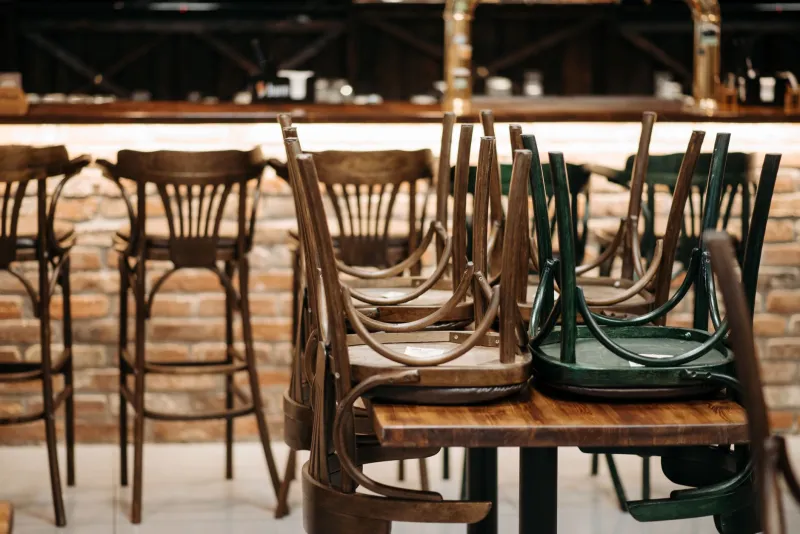
If you've never watched a dining room get put to bed, you're missing one of the quiet ballets of American restaurant life. It starts with the bussers — in our case, Rosa and her nephew Danny, who works evenings between community college classes. They move in opposite directions, clearing ketchup bottles into crates and stacking chairs with a practiced flip that sounds like a card shuffle.
The tables get a two-pass treatment: first the soapy cloth, then the dry one. Nobody taught them this. It's just how it's done, the way it's been done in diners and meat-and-three joints across the country since roughly forever. The dry pass matters. Anybody can wipe a table wet. Making it squeak is a craft.
Then comes the floor. And here's a secret: the mopping has a rhythm to it, always working backward toward the kitchen door, so nobody has to walk across a wet patch. It's the kind of small engineering that never makes a menu but holds the whole operation together.
Dishes Stacked Like Little Monuments
By the time the mop bucket gets emptied, the dish pit has become something close to sculpture. Sheet pans leaned in fanned rows. Coffee mugs nested twelve deep. The big stockpot — the one that held today's soup, and yesterday's, and probably tomorrow's — sits upside down on the drying rack like it's taking a well-earned nap of its own.
Marcus, who's run our dish pit going on four years, has opinions about stacking that he'll defend like family recipes. "Plates with plates, bowls with bowls, and nobody touches my rack order," he says. He's joking. Mostly.
There's something genuinely satisfying about it, though. The dinner rush is chaos — tickets flying, the fryer beeping, somebody always out of to-go boxes. The dish rack at closing is the opposite. Everything in its place. Everything accounted for. It's the day, filed and finished.
Staff Meal: The Best Table in the House
Around 9:30, whoever's left gathers at the corner booth — the good one, by the window — for what the industry calls family meal and what our crew just calls "eating." It's rarely anything fancy. Tonight it was chicken and rice with the last of the cornbread, made from the parts of the day that didn't get sold but absolutely deserved better.
And that's the whole philosophy of the place, isn't it? Nothing good gets wasted, and nobody eats alone.
The conversations that happen over staff meal don't happen at 6 p.m. with a table of strangers waiting on water. Danny talks about a test he's nervous about. Rosa mentions her daughter's first job interview. Marcus, who speaks maybe forty words during a shift, tells a story about his grandmother's kitchen in Mobile that has the whole booth laughing into the cornbread.
This is the hour that recharges the warmth you feel at lunch the next day. You can't fake that kind of thing. It gets made right here, after hours, over reheated sides.
The Last Light Switch
Eventually, someone does the final walk-through. It's a strange little pilgrimage: checking the back door, peeking into the walk-in, turning off the neon in the window that's spelled out our name through a thousand dinners.
The last person out always pauses at the light switch by the register. Not for any practical reason. Just to look back at the darkened room for a second — the booths, the chalkboard special still up from tonight, the little crayon drawings kids left taped to the hostess stand because we can't bear to throw them away.
Then the lights go off, the lock clicks, and the restaurant gets its rest.
Come Back Tomorrow
Here's what we'd tell you if you asked: the dining room you sit in at noon was made ready by people you'll probably never meet, working an hour you'll probably never see. That's true at our place, and it's true at every family restaurant worth its salt from Bangor to Bakersfield.
So the next time you're finishing up a slice of pie and the servers start stacking chairs nearby, know that you're not being rushed out. You're just getting a glimpse of the transition — the moment the room changes hands from your evening to ours.
Both halves matter. But we'll let you in on a little secret: the second half might be the one that keeps us coming back.