Before We Flip the Sign: Why the 8:45 Crowd Deserves Our Best Plate
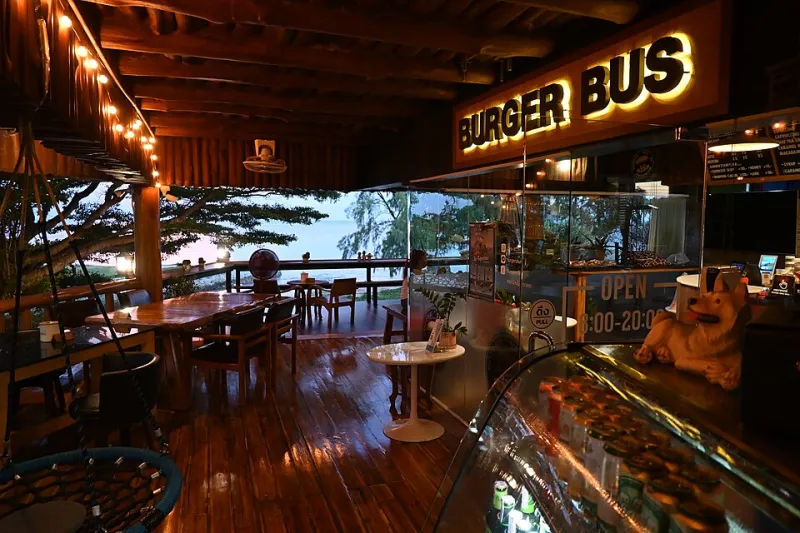
Photo: PattayaPatrol, CC BY-SA 4.0, via Wikimedia Commons
There's a particular kind of tired that walks through a restaurant door at 8:45 on a weeknight. You can spot it from the kitchen. It's the nurse coming off a twelve-hour shift, scrubs still on, hair pulled back, ordering comfort without even reading the menu. It's the delivery driver who's been in and out of his truck since noon. It's the couple who lost track of time talking on the porch and realized neither one of them felt like cooking.
Some kitchens see these folks as an inconvenience. We see them as the whole point.
The Temptation of the Countdown
Let's be honest about how closing time works in a lot of places. The clock hits a certain hour, and suddenly the kitchen starts shrinking. Sauces get put away early. The fryer gets drained. The cook starts wiping down stations that don't need wiping down, sending a message without saying a word: hurry up.
We've all been on the receiving end of that message at some point, whether it was a diner, a diner counter, or a drive-thru window where the person sighing at you made you feel like a bother for existing after 9 p.m.
It's a quiet cruelty, and it happens because it's easy. Tired staff, a long day, a sink full of dishes. The last customer becomes an obstacle between you and going home. But hospitality isn't a business of when it's convenient. It's a business of showing up for people exactly when they need it — and for a lot of people, 8:45 is exactly when they need it.
Who Walks In at 8:45
Spend enough years behind a counter and you start to recognize the late crowd as its own little community.
There are the shift workers — nurses, warehouse crews, the folks who keep the lights on while the rest of the town sleeps. Their schedules were never built around a 6 p.m. seating. When they walk in, they're not being difficult. They're being normal, by the rules of their own lives.
There are the parents who finally got the kids down and escaped for an hour, running on fumes and grateful for someone else's cooking.
And there are the stragglers — the ones who just wanted one more hour of conversation, one more slice of pie, one more reason not to end the evening yet. Honestly? Those might be the best customers a kitchen ever gets.
The Case for Cooking It Like It's the First Order
Here's the argument we make in our kitchen, and we'll make it anywhere: the last plate of the night should be cooked with the same pride as the first. Not close to the same pride. The same.
Why? Because that plate is a promise. When someone sits down at 8:50, they're trusting that the food will be hot, the gravy will be made with care, and the bread will be fresh — not reheated leftovers scraped together from the day's remains. Breaking that trust because the clock said it was okay to is a small betrayal, and small betrayals add up.
There's a practical side too. The late crowd talks. The nurse tells her coworkers. The driver tells the other drivers. Word travels fast in a town, and the restaurants that treat latecomers well earn a kind of loyalty you can't buy with a coupon.
What Latecomers Teach Us About Hospitality
If you pay attention, the 8:45 crowd will teach you more about hospitality than any training manual.
They teach you that timing is a courtesy, not a rule. A restaurant that closes its heart at 8:30 while keeping its doors open until 9 isn't really open. The sign on the door should mean what it says.
They teach you that people remember how you made them feel at their lowest. A tired person walking into a warm room and being greeted like a guest — not a burden — that's the kind of thing that turns a first-timer into a regular.
And they teach you that the end of the night matters as much as the beginning. Anyone can be gracious at noon. Character is what happens at the tail end of a double, when you're out of patience and someone new walks in.
Our Little Closing-Time Ritual
So here's what we do. Fifteen minutes before close, the kitchen checks in with each other — not to start shutting down, but to make sure everything's still ready. Gravy warm. Coffee fresh. Dessert case full. If someone walks in at 8:57, they get the same meal, the same smile, and the same unhurried service as the noon rush.
And when that last table finally leaves, we don't breathe a sigh of relief. We flip the sign, pour ourselves a cup of the good coffee, and feel pretty lucky that our day ended with someone choosing to spend their evening with us.
Closing time isn't a countdown. It's just another hour to be kind. And around here, we plan on keeping it that way — one late plate at a time.