Bite Before the Butter Melts: The Cornbread Ritual Nobody Taught Us
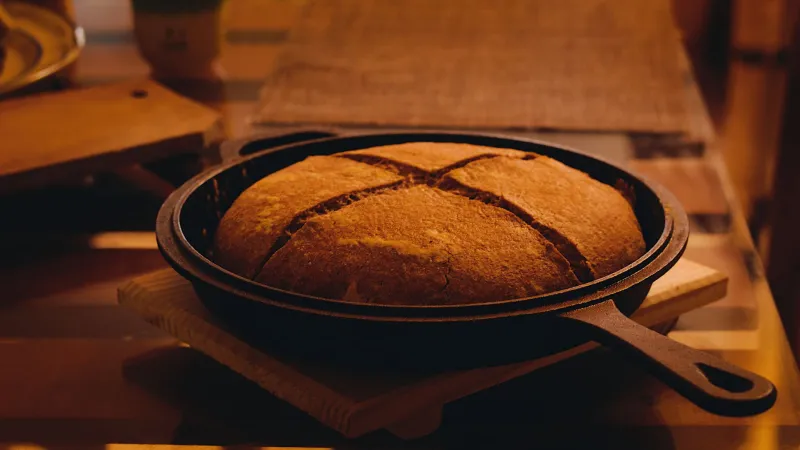
There's a moment in our kitchen that happens every single day, and if you've ever eaten here, you've unknowingly been part of it.
The cast-iron skillet comes out of the oven, golden and hissing. The cook sets it on the cooling rack, grabs a butter knife, and — without ceremony, without comment — cuts a small triangle from the corner and eats it standing up. Then, and only then, does the cornbread go out to the tables.
We call it the fifth spoonful rule, though nobody remembers who named it that. The idea is simple: you don't serve what you haven't tasted. And cornbread, more than almost anything else we make, earns that taste.
Why the Corner?
Any cook will tell you that the corner of a pan is where the truth lives. The center of the cornbread is forgiving — it's moist, it's protected, it's easy. But the corner is where the crust meets the wall of the skillet, where the batter ran thin, where the heat hit hardest. If the corner is right, the whole pan is right.
So we taste the corner. Always. It's less about quality control, honestly, and more like a handshake — the cook's quiet way of saying, this one's good enough to put my name on.
Some of our servers have started telling tables about it, and now we've got regulars who ask, half-joking, whether the corner got its taste today. It always has. It always will.
The Recipe, As Promised
We've been asked enough times that it feels wrong to keep it to ourselves. This is the version our family has made for three generations, baked in a well-seasoned 10-inch cast-iron skillet.
Ingredients
- 1 cup yellow cornmeal (stone-ground, if you can get it)
- 1 cup all-purpose flour
- 1 tablespoon baking powder
- 1 tablespoon sugar — yes, just one. This isn't cake.
- 1 teaspoon fine salt
- 1 cup buttermilk
- 2 large eggs
- 1/4 cup melted butter, plus more for the skillet
Method
- Heat your oven to 425°F and put the empty, buttered skillet in while it warms. A screaming-hot pan is the secret to that crackling bottom crust.
- Whisk the dry ingredients in one bowl, the buttermilk, eggs, and melted butter in another.
- Combine them with a few swift strokes — lumps are fine, overmixing is not. Lumps mean tenderness.
- Pull the hot skillet out (carefully!), pour in the batter — it should sizzle on contact — and bake 20 to 25 minutes, until the top is deep gold and the edges pull away from the sides.
- Cool for five minutes. Then, per house rules, cut a corner and taste it before anyone else gets a bite.
Tips for the Perfect Crumb
After years of corners consumed in the name of research, here's what we know:
- Buttermilk is non-negotiable. The tang balances the cornmeal's sweetness, and the acid tenderizes the crumb. No buttermilk? Stir a teaspoon of vinegar into regular milk and let it sit for five minutes.
- Don't trust the timer, trust the top. Ovens lie. Cornbread is done when the surface turns from pale gold to toasty amber.
- Rest it, briefly. Cutting too soon turns steam into gummy texture. Five minutes of patience changes everything.
- A little sugar goes a long way. We know the great North-South sugar debate rages on. One tablespoon splits the difference beautifully — sweet enough to notice, honest enough to argue about.
Your Stories: The Home Version
When we mentioned this ritual on our counter chalkboard last month, the confessions came pouring in.
A reader named Dot from two towns over wrote: "My mother cut the corner off every pan since 1974. I thought she was just hungry. Turns out she was checking her work. I do it now too, and my daughter thinks I'm just hungry."
Another reader, Mike, told us he bakes cornbread every Sunday for his grandkids and calls his taste "the inspector's cut." His granddaughter, age nine, has started demanding an inspector's cut of her own. We think that's how traditions survive.
And our favorite note, hand-delivered by a regular: "I never served a single pan without tasting it first, in forty years of feeding a family. I didn't know it had a name."
It didn't, really. Not until we gave it one. But it's been happening in American kitchens — in cast iron and glass dishes and paper-thin aluminum pans — for as long as cornbread has come out of ovens.
The cook tastes. The cook nods. The bread goes out.
That's the whole ritual. And next time a corner is missing from your skillet at our tables, you'll know: somebody in the back cared enough to check.