She Never Wrote It Down: Remembering the Servers Who Kept Our Orders in Their Hearts
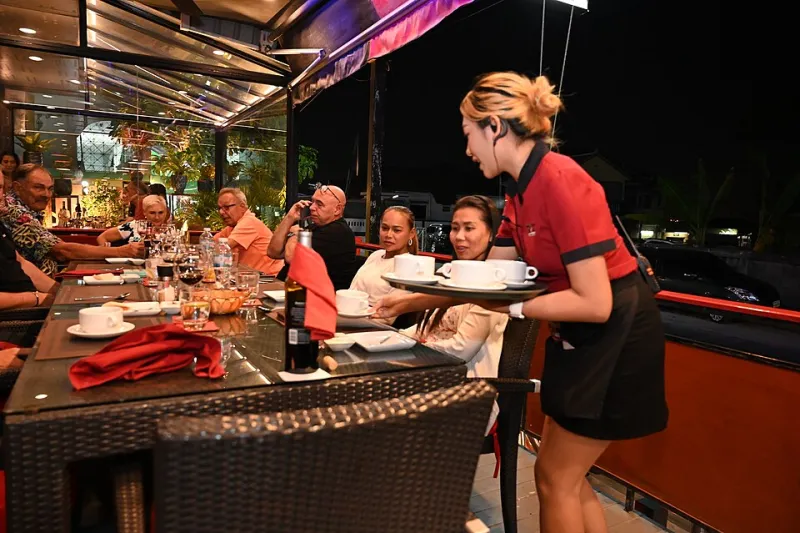
Photo: PattayaPatrol, CC BY-SA 4.0, via Wikimedia Commons
There's a moment every regular knows. You push through the door, still shaking rain off your coat, and before you've made it past the hostess stand, a voice calls out from three tables away: "Coffee's already brewing, hon. And I told Dot to save you a slice of that lemon meringue."
No app has ever done that. No loyalty program, no QR code, no algorithm. Just a person, a memory, and years of Tuesday lunches.
The Rarest Thing on the Menu
We talk a lot around here about comfort food — the roasts, the gravies, the casseroles that get a second life in the freezer. But comfort isn't only what comes out of the kitchen. Sometimes it's who brings it to the table.
In an era when so much of dining out is automated — kiosks, tablets bolted to the table, a chatbot answering the reservation line — the server who simply knows you has quietly become the rarest luxury in American restaurants. You can't franchise it. You can't train it in an onboarding video. It only accumulates, one shift at a time, the way a cast iron pan builds its seasoning.
And that's exactly why the chains can't touch it. A corporate playbook can standardize the hash browns, but it can't standardize remembering that Mr. Alvarez takes his coffee "with the good cream, not the little cups," or that the Hendersons lost their dog in March and could use a little extra sweetness with their pie.
Dot, and Others Like Her
Ask around any small town and you'll hear the same names. Dot. Luann. Big Rita. Rosie from the diner off Route 9 who worked the breakfast shift for thirty-one years and claims she never once wrote down an order.
"People think it's a trick," Rosie told us once, refilling a mug without being asked. "It's not a trick. You just pay attention. Somebody tells you their granddaughter's name is Emma, you don't forget a thing like that. Why would you?"
Why would you, indeed. That's the whole philosophy of home-style cooking, isn't it? Treat the table like it's your own kitchen. And in your own kitchen, nobody asks you to repeat your order.
There was a letter pinned to the corkboard in one diner's back office that we've never stopped thinking about. A woman wrote in after her father passed — he'd been a Tuesday-morning regular for a decade. The server, she said, came to the funeral. "She told stories about him I'd never heard. She knew what he ordered, but more than that, she knew him. You gave my dad a second family."
That's not service. That's community, delivered on a warm plate.
Memory as a Form of Hospitality
Here's what we've come to believe: remembering someone's order is really a way of remembering them. The "extra crispy" is shorthand. The "dressing on the side, and don't skimp" is a running joke between two people. When a server recalls it, they're telling you: You matter here. You're not a ticket number. This is your seat, and we kept it warm.
Psychologists might call it personalization. Regulars call it something simpler — being known. And being known, it turns out, is delicious alongside just about anything.
It changes the food, too, if we're honest. The meatloaf tastes better when the person carrying it out asks how your daughter's recital went. The soup is warmer when the mug of coffee arrived before you even asked. Ask any diner regular and they'll tell you: half the meal is the greeting.
A Thank-You to the Keepers
So this one's for the servers. The ones who hold four tables' worth of orders in their heads and a whole neighborhood's worth of news in their hearts. The ones who notice when the usual crowd of four becomes a party of three, and who know — without asking, without prying — whether to bring the extra chair or the extra napkins.
You are the unsung memory-keepers of the American table. The recipes get the glory, but you're the reason people come back. Any restaurant can serve a good hot open-faced sandwich. Not every restaurant can serve it to you, specifically, exactly the way you like, on the day you needed it most.
Next time a server greets you with your usual before you've sat down, do us a favor: tell them what it means. Or better yet, tell us in the comments — we're collecting stories about the Dots and Rosies of the world, and we've got plenty of room at the table.
Because around here, we've always believed the kitchen makes the food. But it's the people who make it home.