The Jar With a Reputation: Turning One House Sauce Into a Habit
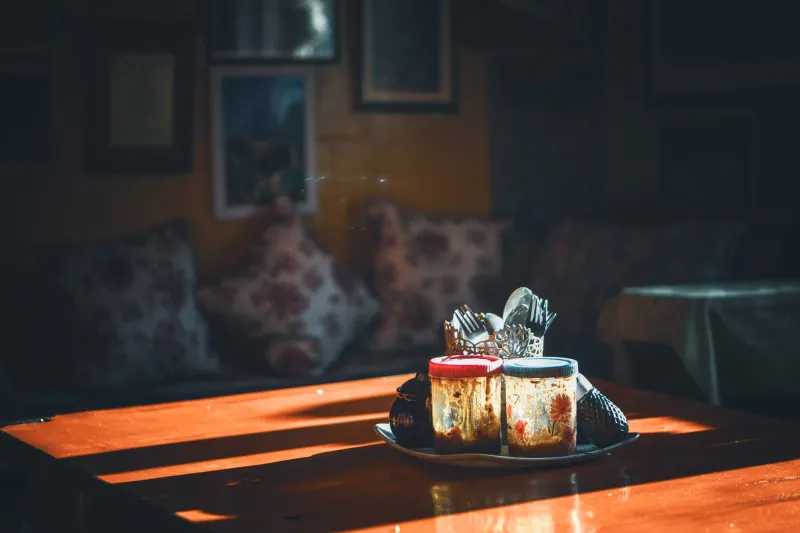
Every home-style kitchen has a quiet test waiting on the table. It is not the bread basket, though that helps. It is not the specials board, though that gets attention. It is the small jar beside the salt and pepper, the one that makes a first-timer pause and ask, what is that?
At Hima Mmas, we think of that jar as a handshake. Ketchup is universal. Mustard is dependable. But a house sauce is local. It says someone in this kitchen made a decision, tasted it, adjusted it, and decided it was worth sharing. That small act of specificity can do more for a table than a whole page of menu descriptions.
A Sauce Is a Handshake
A house sauce does not need to be complicated. It needs to be recognizable. It should have a flavor that regulars can describe in a few words and newcomers can understand after one dip. Maybe it is smoky and a little sweet. Maybe it is bright with vinegar and herbs. Maybe it is creamy, tangy, and just spicy enough to make you reach for your water glass.
The point is not to outshine the food. The point is to give the food a signature. A plain piece of chicken becomes a little more memorable when there is a jar of something good beside it. Fries become a ritual. A breakfast sandwich gets a reason to come back on a Tuesday. Even roasted vegetables feel more cared for when someone thought to offer a spoonful of house-made charm.
This is the psychology of tabletop generosity. A full jar says we are not counting every teaspoon. A clean rim and a small spoon say we thought about how you would use it. A label with a name says this is ours, and now it is yours, too.
What Earns the House Label
Not every sauce deserves a name and a place on the table. A house sauce should pass a few simple tests before it gets promoted from kitchen experiment to front-of-house fixture.
First, it should be useful. If it only works on one dish, it is a garnish, not a house sauce. Test it on eggs, roasted potatoes, chicken, grilled cheese, or a bowl of beans. If it improves three of those without argument, it has a future.
Second, it should be scalable. A sauce that takes two hours and three specialty ingredients might be a weekend project, not a daily ritual. Home-style kitchens run on practicality. The best house sauce is one the prep cook can make consistently on a busy morning without a secret handshake.
Third, it should have a little backbone. A house sauce can be mild, but it should not be forgettable. It needs enough acid, salt, heat, or smoke to wake up a plate. It should taste like something, not just like the idea of something.
Finally, it should fit the kitchen. A barbecue joint might lean smoky and molasses-dark. A breakfast counter might go bright and herby. A neighborhood spot with a little Latin influence might keep a jar of smoky chili oil or a tangy green sauce close at hand. The sauce should feel like it grew out of the menu, not like it was borrowed from a trend report.
The Name Does Half the Work
A house sauce needs a name, but not a novel. The best names are plain enough to say across a counter and specific enough to remember. Grandma's red sauce. The pink one. Hima's hot honey. Green garden sauce. Smoky table sauce.
Avoid names that require an explanation. If the server has to tell a three-sentence story before the customer can ask for it, the name is working against the jar. A good name travels. It gets repeated in booths, in cars, and in group texts. Meet you there, and get the sauce.
A simple label helps, too. Write the name on the jar. Add the date it was made. Keep the jar clean and the spoon handy. These are small details, but they tell the table that the sauce was not an afterthought. It was planned.
Generosity Has a Cost and a Return
There is a practical question every owner asks: what does it cost to put a jar on every table? The answer is usually less than expected. A house sauce built from pantry staples, seasonal produce, or a smart use of kitchen trim can be inexpensive per serving. The return is harder to measure but easy to feel.
When a regular asks for extra sauce and gets it without a sigh, they remember. When a first-timer asks what is in the jar and the server answers with genuine enthusiasm, they remember that, too. When a family passes the jar around the table like it belongs to them, the meal has already crossed a line from transaction to habit.
That does not mean giving away the whole pantry. It means treating the sauce as part of hospitality, not as an upsell. A small jar to take home, a spoonful on the side, a refill without a charge — these are the kinds of gestures that turn a good plate into a place someone wants to return to.
The First-Timer Test
Watch a new table for the first ninety seconds. Do they notice the jar? Do they ask about it? Do they dip a fry and then go back for a second? If they do, the sauce is doing its job. If the jar sits untouched, the problem is rarely the recipe. It is usually access. Maybe the jar is too far away. Maybe there is no spoon. Maybe the label is too clever and the sauce looks like a decoration.
Make the jar easy to use. Keep it within reach. Keep it full. Keep the rim wiped. A house sauce should feel like an invitation, not a museum piece.
Let the Regulars Shape It
A house sauce can start as a kitchen idea, but it becomes a house sauce when the regulars claim it. Listen for the way people ask for it. Do they use the name? Do they ask for it on the side, on top, or mixed in? Do they want a jar to take home? Those small requests are free market research.
You can rotate a seasonal sauce beside the original, but do not retire the one people ask for by name. Consistency is part of the comfort. The jar can change slightly with the season — a little more heat in winter, a little more herbs in summer — but the promise should stay the same.
In the end, a house sauce is not really about sauce. It is about a kitchen saying, we made this for you. Ketchup can be bought anywhere. A jar with a reputation has to be earned. And once it is, it becomes one of the quiet reasons people come back, sit down, and ask for the usual — with an extra spoonful on the side.