Nobody's Booth, Somebody's Home: The Quiet Case for the Corner Table
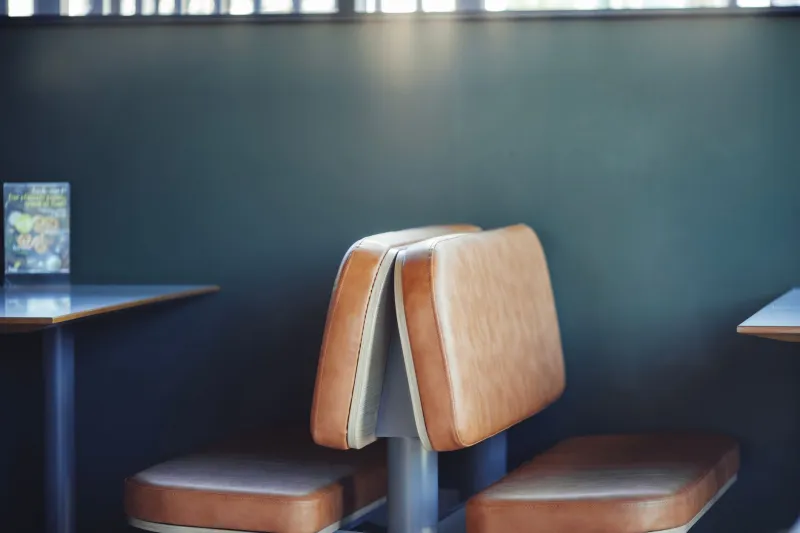
There's a booth in the far corner of our dining room that most first-timers walk right past. It's the two-top by the window, the one where the afternoon sun cuts across the syrup bottles and the baseboard heat makes a faint ticking sound in winter. For years, we joked about it being our hardest seat to fill. Then Marguerite started coming in every Tuesday.
She asked for it by name — not our name for it, because we didn't have one, but hers. "My booth," she'd say, and the servers knew exactly where to pour the coffee before she'd even unwound her scarf.
That's when it clicked for us: a restaurant isn't just its best tables. It's all of them. Especially the ones nobody fights over.
The Seat Nobody Fights For
Every dining room has its hierarchy, whether we admit it or not. There are the four-tops in the middle, great for families and birthday parties. There's the counter, beloved by solo regulars who want to chat with the cook. And then there are the stragglers — the table too close to the kitchen door, the booth beneath the light that flickers on damp days, the two-top wedged beside the coat rack.
We used to apologize for those seats. Now we think that was backwards.
Because here's the thing about overlooked tables: they attract a certain kind of person. Not the person passing through, sizing up the room. The person who's decided, quietly and completely, that this is where they belong.
What the Corner Crowd Knows
Ask the folks who claim the edges of a dining room and you'll hear a surprising amount of agreement. The window seat means you get to watch the street — the school bus at 3:40, the first snowplow of the season, the neighbor's dog that drags its leash past every morning. The booth near the kitchen stays warm in January and smells like fresh bread half the day. The table by the coat rack? You hear everything, and in a small town, that's not a flaw.
There's also something deeper at work. Psychologists might call it territoriality. We call it making yourself at home. A regular who picks the wonky table under the humming light isn't settling — they're claiming. They've looked past the obvious and found something the rest of the room hasn't noticed yet.
Marguerite liked her booth because, in her words, "I can see the whole place, and nobody can see me cry when the meatloaf reminds me of Ralph." Twelve years of Tuesdays. You don't get that at the center table.
A Good Host Never Grades the Real Estate
We've all been to restaurants where the seating feels like a sorting hat — the good-looking crowd up front, the rest of us shuffled to the annex. A true home-style kitchen doesn't work that way. When someone walks in, the question isn't "where do they fit?" It's "where will they be comfortable?"
That means knowing the room the way you know your own house. Which chair wobbles. Which spot gets the draft. Which table a new dad can slide a car seat next to. Which corner suits someone who wants to read the paper in peace with a bottomless cup.
Our servers have an unspoken rule: never seat a first-timer in the corner and hope for the best — but never steer away a regular from it, either. The corner booth by the window has hosted first dates, grief lunches, tax-season commiserations, and one marriage proposal we know of. Not bad for the seat nobody wanted.
The Empty Tables Matter Too
Here's the part that took us longest to learn. On a slow Wednesday afternoon, when half the dining room sits empty and the coffee pot is more companion than necessity, those quiet tables are doing something too. They're holding space. They're the reason a walk-in at 2 p.m. doesn't have to hover by the door. They're where a stranger becomes a regular, one unhurried refill at a time.
A full house is a joy. But a room with breathing room — with a few open booths catching the late light — that's a room with patience in it. It says: take your time. We're not going anywhere.
Save Us a Seat
So the next time you're out for a plate of something warm and the host points you toward the back corner, don't sigh. Sit down. Look out the window. Let the light do its thing. You might be claiming the best seat in the house — it just takes somebody a while to know it.
And Marguerite, if you're reading: your booth's ready. Coffee's already poured.